
Iran News: Real-Time Conflict Analysis
Iran News is closely followed because events involving Iran can quickly affect the wider Middle East. Moreover, a single military incident can influence diplomacy, energy markets, shipping routes, financial conditions, and public safety across several countries.
However, real-time conflict analysis requires more than repeating breaking headlines. Instead, it requires careful separation between confirmed facts, official claims, independent reports, expert assessments, and unverified information.
This is especially important during periods of military tension. In such situations, information can move very quickly. At the same time, early reports can contain errors. Images can be old. Videos can come from another conflict. Initial casualty figures can also change.
Iran News: What Real-Time Conflict Analysis Means
More Than Breaking News
Real-time conflict analysis means examining events as they develop while recognizing that information may still be incomplete.
A strong analysis asks several basic questions:
- What happened?
- When did it happen?
- Where did it happen?
- Who is claiming responsibility?
- What evidence supports the claim?
- Has an independent source confirmed it?
- What happened immediately afterward?
- What could happen next?
Therefore, the goal is not simply to predict the future.
Instead, the goal is to understand the situation with the information available at that moment.
Facts, Claims, and Assessments
These three categories should remain separate.
Facts are events supported by strong evidence.
Claims are statements made by governments, military organizations, political groups, or other actors.
Assessments are informed judgments about what those events could mean.
For example, a government may claim that it destroyed a military target. That is a claim until independent evidence confirms the result.
Likewise, an analyst may say that an operation could increase escalation risk. That is an assessment rather than a confirmed event.
This distinction makes Iran News analysis more accurate and easier to understand.
Iran News: The Current Conflict Environment
A Complex Regional System
Iran’s security environment is shaped by several connected disputes.
These include tensions involving:
- Iran and Israel
- Iran and the United States
- Israel and Palestinian groups
- Israel and Hezbollah
- armed groups in Iraq
- the Yemen conflict
- Gulf security
- the Iranian nuclear program
Therefore, an event in one location can influence decisions somewhere else.
For example, a confrontation involving Israel and an Iranian-linked group could affect Tehran’s calculations. Similarly, an American military response in the region could influence Iranian policy.
Why Escalation Is Difficult to Predict
Military escalation does not always follow a straight path.
One side may want to send a limited warning. However, the other side may interpret that warning as a major attack.
Consequently, retaliation can follow.
Then, additional actors may become involved.
This creates a cycle in which each action is partly a response to the previous action.
Therefore, real-time analysis must watch both what happened and how each actor interprets what happened.
Iran News: Iran’s Strategic Position
Geographic Importance
Iran has a strategic geographic location.
It borders the Persian Gulf, Gulf of Oman, and several countries in the Middle East and Caucasus.
Its location also places it near major energy and trade routes.
Therefore, military developments involving Iran can have economic effects far outside the country.
Military Capabilities
Iran has developed a broad military structure.
It includes conventional forces, the Islamic Revolutionary Guard Corps, missile systems, drones, naval capabilities, air defense, and other security organizations.
Iran’s military strategy has often emphasized deterrence and asymmetric capabilities.
However, military strength alone does not determine the outcome of a conflict.
Economic conditions, intelligence, diplomacy, geography, public support, logistics, and international pressure also matter.
Iran News: Iran and Israel
A Long-Running Rivalry
Iran and Israel have been strategic rivals for decades.
Their disagreements involve regional influence, security, Iran’s nuclear program, missile capabilities, and the Israeli Palestinian conflict.
For many years, much of this rivalry developed indirectly.
However, direct confrontation has increased the importance of careful crisis analysis.
Why Direct Conflict Matters
A direct military confrontation between Iran and Israel could create major regional risks.
Both countries have advanced military capabilities.
Furthermore, each has relationships with other regional and international actors.
Therefore, a major exchange could create pressure for additional responses.
Reading Israeli Statements
Israeli officials often describe Iranian military capabilities as major security concerns.
Such statements are important for understanding Israel’s position.
However, they should still be separated from independently verified information.
This is especially important during fast-moving military events.
Iran News: Iran and the United States
A Difficult Relationship
The relationship between Iran and the United States has remained deeply tense for decades.
Key areas of disagreement include:
- nuclear policy
- sanctions
- military activity
- regional armed groups
- maritime security
- American military deployments
Therefore, a conflict involving Iran can quickly become relevant to American foreign policy.
U.S. Regional Presence
The United States maintains military capabilities and security partnerships in the Middle East.
These relationships are intended to protect American interests and support partners.
However, American forces can also become involved in regional escalation.
Consequently, decisions made in Washington can influence Tehran’s calculations, while Iranian actions can influence American policy.
Avoiding Direct War
The United States and Iran have strong reasons to avoid an uncontrolled full-scale war.
Such a conflict could create enormous military, Iranian economic, and humanitarian costs.
Therefore, even during periods of severe tension, diplomacy and indirect communication can remain important.
Iran’s Missile Capabilities
Strategic Deterrence
Missiles are a major part of Iran’s defense strategy.
Iran has developed different ballistic and cruise missile systems.
These capabilities contribute to its ability to threaten distant targets and therefore support deterrence.
What Missile Reports Can Tell Us
A reported missile launch does not automatically reveal the larger military objective.
Analysts should examine:
- the stated purpose
- the target area
- the timing
- the scale
- the response
- the wider political situation
Therefore, a single launch should not be used as proof of an entire military strategy.
Missile Defense
Israel, the United States, and several Gulf states have invested heavily in missile defense.
As a result, missile attacks and missile interception have become part of a broader regional competition.
This creates a continuous interaction between offensive and defensive systems.
Drone Warfare
Growing Importance
Drones have become an important part of modern warfare.
They can support surveillance, reconnaissance, and attack missions.
Iran has developed a range of unmanned systems and has been accused by several governments of supplying drones or drone technology to partners and allies.
However, responsibility for a specific drone incident should be established through evidence.
Why Attribution Matters
Attribution can affect political decisions.
If an attack is blamed on Iran, governments may consider responding directly against Iranian interests.
If the attribution is uncertain, however, immediate military action could increase the risk of miscalculation.
Therefore, careful verification is essential.
Air Defense and Interception
Defensive Systems
Air defense systems are designed to detect and respond to airborne threats.
They can protect military installations, cities, energy infrastructure, and other strategic locations.
Iran, Israel, the United States, and Gulf states all maintain different forms of air defense.
Why Interception Reports Need Care
During a conflict, governments may announce successful interceptions.
However, the actual number of missiles or drones destroyed can sometimes be difficult to verify independently.
Therefore, official figures should be identified as official claims unless supported by reliable outside evidence.
Maritime Conflict and Shipping
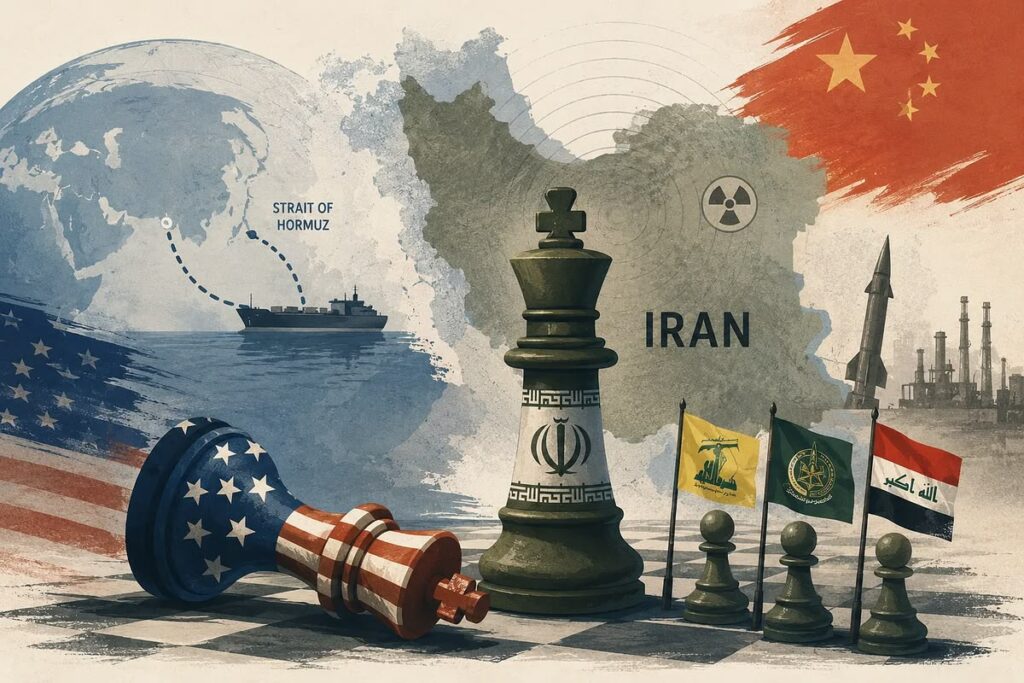
The Strait of Hormuz
The Strait of Hormuz is one of the world’s most important energy routes.
Large volumes of oil and other energy products pass through the region.
Therefore, any serious military crisis involving Iran can create concerns about global energy supplies.
Gulf Shipping
Military incidents involving commercial vessels can increase shipping risk.
Insurance costs may rise.
Some shipping companies may change routes.
Delivery times may become longer.
As a result, regional conflict can create global economic effects.
The Red Sea
The Red Sea is another important trade route.
The conflict in Yemen has contributed to security problems involving commercial shipping.
Therefore, real-time analysis should consider the wider maritime environment rather than focusing only on one country.
Conclusion
Iran News about real-time conflict developments must be understood through evidence, context, and careful analysis.Missile launches, drone incidents, air defense activity, naval encounters, and military deployments can all carry strategic meaning. However, none should be interpreted without considering the wider political situation.That balanced approach provides a clearer understanding of Iran News, while also helping readers recognize both the dangers of escalation and the possibilities for peace.
About The Author
