
Iran News: Tehran’s Latest Military Stance
Tehran’s military stance remains a major issue in Middle Eastern security. Iran’s armed forces, missile capabilities, air defenses, naval forces, and regional partnerships all shape how other countries view the country’s security policy. At the same time, Tehran’s military position cannot be separated from diplomacy, economic pressure, and regional politics.
This Iran News report examines Tehran’s latest military stance in a clear and balanced way. It explains Iran’s defense strategy, the role of its armed forces, missile and drone programs, naval power, air defense, regional security concerns, and the possible risks of further escalation.
Iran News: What Tehran’s Military Stance Means
Tehran’s military stance can be understood through several main goals.
First, Iran seeks to protect its territory from foreign attack. Second, it aims to discourage enemies from launching military operations. Third, it wants to maintain influence across the region. Finally, it seeks to preserve strategic options if a major conflict occurs.
These goals are connected.
For example, Iran’s missile program can support deterrence. Its naval forces can protect important coastal areas. Its air-defense systems can make attacks more difficult. Meanwhile, relationships with regional partners can extend Tehran’s influence beyond its borders.
However, Iran does not rely on one military tool.
Instead, it follows a broader strategy that combines missiles, drones, naval forces, air defenses, conventional forces, the Islamic Revolutionary Guard Corps, and regional partnerships.
This approach is sometimes described as asymmetric defense.
Why Asymmetric Defense Matters
Iran faces opponents with highly advanced air forces and large military budgets. Therefore, Tehran has focused heavily on capabilities that can create risks for stronger opponents without requiring Iran to match them weapon for weapon.
Missiles and drones are central to this approach.
Fast boats, coastal missiles, underground facilities, air defenses, electronic systems, and dispersed military assets can also make an attack more difficult.
As a result, Iran’s strategy focuses heavily on making any military action against the country costly and uncertain.
The Role of Iran’s Armed Forces
Iran has two major military structures.
The regular military is known as the Artesh. It includes ground, naval, and air forces.
The Islamic Revolutionary Guard Corps is a separate and highly influential organization. It has its own ground, naval, aerospace, and other security capabilities.
The two structures have different historical roles, although they both contribute to national defense.
The Revolutionary Guard has a particularly important role in Iran’s missile program and regional strategy.
Meanwhile, the regular armed forces maintain large conventional capabilities.
This dual structure is an important part of Tehran’s defense model.
The Islamic Revolutionary Guard Corps
The Islamic Revolutionary Guard Corps was established after the 1979 Iranian Revolution.
Over the years, it became one of the most powerful institutions in Iran.
The organization has military, political, economic, and regional influence.
Its aerospace force is especially important because it operates many of Iran’s ballistic missiles and drones.
The Guard’s naval forces also operate in the Persian Gulf and nearby waters.
Consequently, any analysis of Iran News concerning Tehran’s military position must consider the Revolutionary Guard.
Iran’s Missile Strategy
Missiles are at the center of Iran’s military deterrence strategy.
Iran has developed a large range of ballistic and cruise missiles. These systems have different ranges and roles.
Some are designed for short-range targets. Others can reach targets much farther away.
The main purpose of this capability is deterrence.
Tehran wants potential opponents to understand that military attacks against Iran could lead to retaliation.
This does not mean every missile system would be used in every crisis.
Instead, their existence creates uncertainty for potential attackers.
Why Missiles Matter to Tehran
Iran’s conventional air force faces major limitations compared with the United States and Israel.
Therefore, missiles offer Tehran another way to project military power.
They can also be launched from mobile platforms, making them harder to locate before use.
Iran has invested in accuracy, mobility, range, and survivability.
At the same time, missile systems remain vulnerable to sophisticated detection and interception networks.
Thus, neither side can assume that missile power guarantees victory.
Drone Capabilities
Drones have become another major part of Iran’s military strategy.
Iran has developed and produced several types of unmanned aircraft.
These systems can perform different tasks, including surveillance and attack missions.
Drones can be cheaper to produce than many traditional aircraft. Therefore, they can offer military planners a way to increase pressure without using expensive fighter aircraft.
Iran’s drone technology has also attracted international attention because Iranian-designed or Iranian-linked systems have appeared in conflicts outside the country.
However, drone warfare also has limits.
Advanced air defenses can detect and intercept many drones. Electronic warfare can disrupt navigation and communications. Weather and geography can also affect performance.
Therefore, drones are best understood as one part of a wider military strategy.
Iran’s Air Defense Strategy
Air defense is critical to Tehran’s security planning.
Iran has developed and acquired several surface-to-air missile systems. These include domestic systems as well as older foreign-designed equipment.
The goal is to protect important military facilities, nuclear sites, energy infrastructure, cities, and other strategic locations.
Iran has also invested in radar networks and layered defenses.
A layered system uses different types of sensors and weapons to create multiple opportunities to detect and stop incoming threats.
However, no air-defense system is perfect.
Modern aircraft, cruise missiles, drones, electronic warfare, and other technologies can challenge even strong defenses.
Therefore, Tehran continues to treat air defense as a major military priority.
Iran’s Air Force Challenge
Iran’s conventional air force faces a different situation.
Some of its aircraft are based on older designs. Maintenance and spare-parts problems have also affected military aviation over the years.
International sanctions have made access to Western aircraft and parts difficult.
As a result, Iran has placed greater emphasis on missiles, drones, air defense, and other systems.
The country has also sought to develop domestic aircraft and upgrade older platforms.
Still, replacing a modern fighter fleet is difficult and expensive.
This imbalance helps explain why Tehran’s military strategy does not depend only on traditional air power.
Iran News: Naval Power and the Persian Gulf
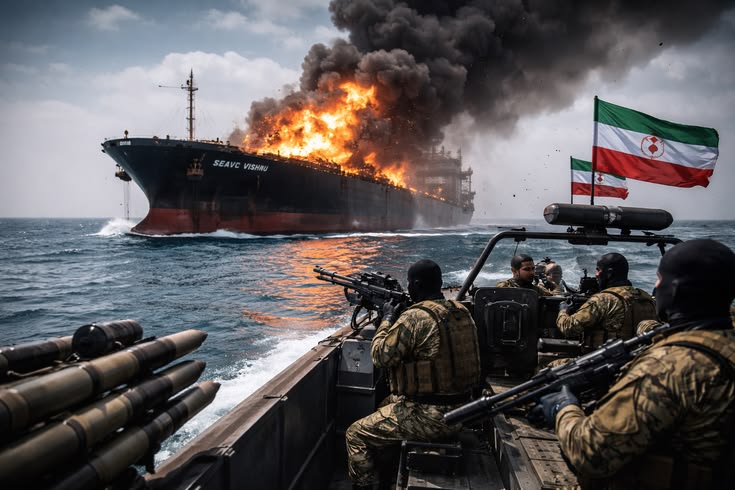
Iran’s naval strategy is closely linked to its geography.
The country has a long coastline along the Persian Gulf, Strait of Hormuz, and Gulf of Oman.
The Revolutionary Guard’s naval forces focus heavily on the Persian Gulf and nearby waters.
They operate fast boats, coastal missiles, mines, drones, and other systems.
The regular navy has a different role and operates larger vessels, including ships capable of longer deployments.
Together, these forces give Iran several ways to influence maritime security.
Iran News: The Strait of Hormuz
The Strait of Hormuz is one of the world’s most important energy routes.
Large quantities of oil and gas move through the area.
Therefore, military tension around the Strait can quickly affect international markets.
Iran has repeatedly made clear that it considers the Persian Gulf and Strait of Hormuz strategically important.
In a serious conflict, Tehran could attempt to use its naval and missile capabilities to increase pressure on opposing forces.
However, closing or seriously disrupting the Strait would also create major economic costs for Iran and its neighbors.
That creates an important deterrent against uncontrolled escalation.
For this reason, Muslim Ummah News about naval movements or threats around the Strait should be viewed within the larger economic and security picture.
Iran News: Fast Boats and Asymmetric Naval Warfare
Revolutionary Guard naval forces have invested in large numbers of small and fast vessels.
These boats can move quickly and operate close to Iran’s coastline.
The strategy is different from traditional naval warfare.
Instead of trying to defeat a large fleet in a conventional battle, small units can create uncertainty, force opponents to spread their defenses, and threaten ships in confined waters.
This is an example of asymmetric warfare.
The approach takes advantage of geography.
The Persian Gulf contains narrow waterways, busy shipping routes, and many coastal facilities.
Consequently, Iran’s geographic position gives its smaller naval forces strategic importance.
Iran News: Coastal Missiles
Iran has also developed coastal anti-ship missile capabilities.
These weapons can threaten vessels operating near the Iranian coastline.
When combined with radar, drones, fast boats, and other surveillance systems, coastal missiles can create a wider defensive network.
However, modern naval forces have their own defenses.
Aircraft, ships, electronic warfare systems, and long-range weapons can target launch sites.
Therefore, coastal missiles create risk but do not make Iranian waters impossible to enter.
Iran News: Iran’s Nuclear Facilities and Military Protection
Iran’s nuclear program is another major reason for its military posture.
The country operates several nuclear facilities, including enrichment-related sites.
These locations have been closely watched by international governments for years.
Tehran insists that its nuclear activities have peaceful purposes, while other governments remain concerned about the possibility of weapons development.
Because nuclear facilities could become targets during a major confrontation, Iran has invested heavily in protecting strategic sites.
Air defenses, hardened structures, underground facilities, and geographic separation can make military attacks more difficult.
Conclusion
Tehran’s military stance is built around deterrence, territorial defense, regional influence, and the ability to respond to external threats. Missiles, drones, naval forces, air defenses, cyber capabilities, and regional partnerships all contribute to this strategy.
For readers following Iran News, it is important to distinguish between confirmed military developments, official claims, and predictions about what Tehran may do next. A careful approach provides a clearer picture of the country’s strategic position.
Iran has strong reasons to avoid a conflict that could damage its economy, infrastructure, political stability, and regional position. Its opponents also face major costs if a confrontation expands.
About The Author
